Traumatic Brain Injury Resource Bundles for American Indians

Traumatic Brain Injury (TBI) is a disruption in the normal function of the brain that can result from a bump, blow, or jolt to the head or a penetrating head injury. Around 176 Americans die from a TBI-related injury each day. Indigenous people throughout North America are at greater risk for TBI and poor TBI-related outcomes. TBI has long been a concern for American Indians and there continues to be numerous barriers to receiving culturally appropriate, timely, and local short- and long-term treatment and services.
The TBI Resource Bundle for American Indians
In collaboration with American Indians partners, AIR researchers have developed a Traumatic Brain Injury Bundle to support American Indians with TBI, their families, and communities. The TBI Bundle contains free, research-based, and culturally tailored resources to help improve the rehabilitation outcomes of American Indians with TBI. Please check back periodically as we continue to update the Bundle with new resources.
Customizing TBI Bundle Resources
If your organization (e.g., Indian health organizations, hospitals, tribals, organization supporting people with TBI) is interested in customizing the TBI Bundle Resources as free information resources, we can add your organization’s logo, contact information, and any endorsement language on the TBI Bundle resources. Please contact us for more information.
Selected resources have now been translated into two Alaska native dialects: General Central Yup’ik and Chevak Cup'ik.
INFOGRAPHICS | INFOCOMICS | ALASKA BUNDLE | CHILDREN & YOUTH BUNDLE
Infographics
Understanding TBI
This infographic describes what TBI is, the causes of TBI, and recovery and impact of TBI.
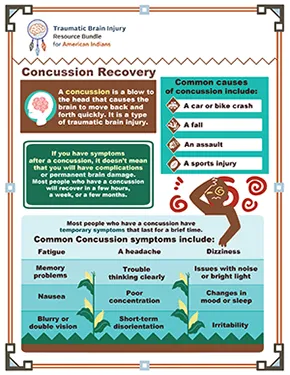
Concussion Recovery
This infographic describes the common causes and symptoms of concussion and the general course of recovery. Recipient of the 2023 Hermes Creative Awards Honorable Mention, honoring the messengers and creators of traditional and emerging media.
TBI and Alcohol Use
This infographic describes the effects of alcohol on the brain after TBI and ways to cut down or stop drinking.
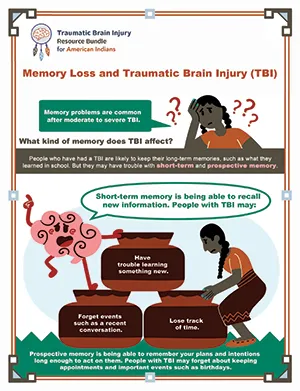
Memory Loss and TBI
This infographic describes how TBI may affect memory and offers strategies to help manage memory loss.
Depression After TBI
This infographic provides information on the causes of depression after TBI and the treatment options available.
Balance Problems After TBI
This infographic describes the common causes of balance problems after TBI and ways you can improve your balance.
Vision Problems After TBI
This infographic describes the common vision problems caused by TBI and offers tips to manage vision problems.
Headaches After TBI
This infographic describes the common types of headaches after TBI and provides strategies to manage headaches.
Infocomics
Acute Inpatient Rehabilitation After TBI
This infocomic gives an overview of acute inpatient rehabilitation after TBI, highlighting its purpose and the core therapies typically provided.
Fatigue and TBI
This infocomic describes fatigue after TBI and strategies on how to manage energy.
Social Skills After TBI
This infocomic describes strategies to manage social skill challenges after TBI.
Behavior Changes After TBI
This infocomic describes behavior changes after TBI and strategies to manage behavior problems.
Irritability, Anger, and Aggression After TBI
This infocomic provides strategies on how to manage anger, irritability, and aggression after TBI.
Vision Recovery After TBI
This infocomic describes vision challenges after TBI and strategies to manage those challenges.
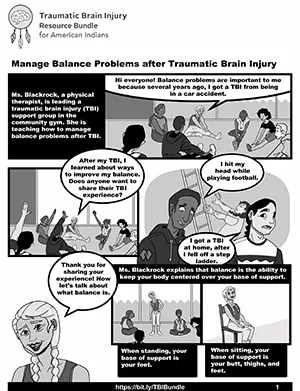
Managing Balance Problems After TBI
This infocomic describes common causes of balance problems after traumatic brain injury and provides strategies to manage balance problems.
Stay Healthy After TBI
This infocomic provides information on how to stay healthy after TBI.
Managing Depression After TBI
This infocomic provides strategies to manage depression after TBI.
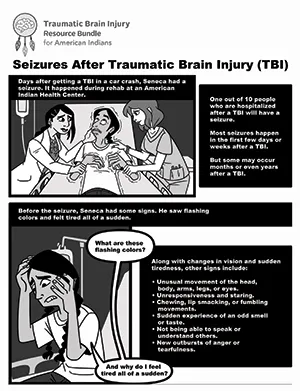
Seizures After TBI
This infocomic provides information on seizures after TBI, including treatment options and what caregivers should do if you are having a seizure. Winner of the 2023 Bronze Web-based Digital Health Award.
Concussion Recovery
This infocomic provides information on concussions, including what a concussion is, symptoms, and what to expect during the recovery process. Winner of the 2024 Silver Web-based Digital Health Award. View the animated version of this infocomic.
Memory Problems After TBI
This infocomic provides information on memory problems after TBI and strategies to manage memory problems.
Cognitive Problems After TBI: Part 1
This infocomic highlights effective strategies for improving planning and organization skills following cognitive challenges from a TBI.
Cognitive Problems After TBI: Part 2
This infocomic highlights ways to improve communication and understanding of information following cognitive challenges from a TBI.
Cognitive Problems After TBI: Part 3
This infocomic highlights ways to improve attention, judgment, self-awareness, reasoning, and problem-solving following cognitive challenges from a TBI.
TBI Bundle for Alaska Natives
TBI Bundle in General Central Yup’ik
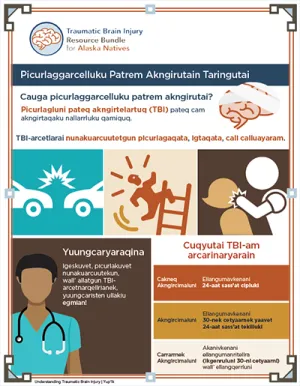
Understanding TBI
This infographic describes what TBI is, the causes of TBI, and recovery and impact of TBI.
Seizures After TBI
This infocomic provides information on seizures after TBI, including treatment options and what caregivers should do if you are having a seizure.
Managing Depression After TBI
This infocomic provides strategies to manage depression after TBI.
Concussion Recovery
This infographic describes the common causes and symptoms of concussion and the general course of recovery.
TBI and Alcohol Use
This infographic describes the effects of alcohol on the brain after TBI and ways to cut down or stop drinking.
Headaches After TBI
This infographic describes the common types of headaches after TBI and provides strategies to manage headaches.
TBI Bundle in Chevak Cup’ik
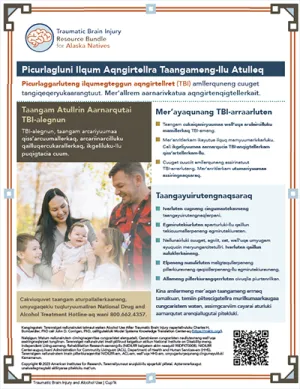
Understanding TBI
This infographic describes what TBI is, the causes of TBI, and recovery and impact of TBI.
Seizures After TBI
This infocomic provides information on seizures after TBI, including treatment options and what caregivers should do if you are having a seizure.
Managing Depression After TBI
This infocomic provides strategies to manage depression after TBI.
Concussion Recovery
This infographic describes the common causes and symptoms of concussion and the general course of recovery.
TBI and Alcohol Use
This infographic describes the effects of alcohol on the brain after TBI and ways to cut down or stop drinking.
Headaches After TBI
This infographic describes the common types of headaches after TBI and provides strategies to manage headaches.
Children & Youth Bundle
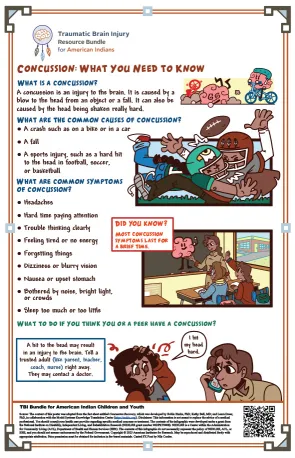
Concussion Recovery Poster: What You Need to Know
This color poster (11 x 17 inches) is designed to educate children and youth about concussion recovery and can be displayed in places that children and youth frequent, such as classrooms, gyms, school nurse offices, and community centers.
Concussion Recovery Infographic
This infographic, a smaller version of the poster above (8.5 x 11 inches), is designed to educate children and youth about concussion recovery and can be used as a handout.
Concussion Recovery Coloring Sheet
This black-and-white version of the poster is designed for children to color in while learning about concussion recovery.
Behavior Changes After TBI Infocomic
This infocomic describes behavior changes after TBI and strategies to manage behavior problems.
Social Skills After TBI Infocomic
This infocomic describe strategies to manage social skill challenges after TBI.
Concussion Recovery Infocomic
This infocomic provides information on concussions, including what a concussion is, symptoms, and what to expect during the recovery process.
Concussion Recovery Visual Story
This animated video is a visual story based on the concussion recovery infocomic. It provides information on concussions, including what a concussion is, symptoms, and what to expect during the recovery process.
The project is funded by the National Institute on Disability, Independent Living, and Rehabilitation Research (NIDILRR), Administration for Community Living, U.S. Department of Health and Human Services (grant number 90DPKT0008).