Teaching in the Time of COVID-19

The COVID-19 pandemic profoundly disrupted education systems across the country and around the world, changing what classrooms and learning looked like on a day-to-day basis. Educators were forced to navigate a constantly shifting landscape, with the health of students, teachers, and the community at large at stake.
Explore our research, resources, and webinar recordings to better understand the challenges teachers faced and find tools and resources educators could use as they moved forward:
- Strengthening teacher quality
- Resources for teachers and education leaders
- Learning more about teaching and learning during COVID-19
- Teacher appreciation during a pandemic
- Teaching and COVID-19 around the world
- Other resources from AIR Centers and partners
Strengthening Teacher Quality
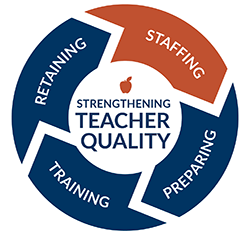 In this series, AIR experts provided their insight into evidence-based practices and approaches for facilitating high-quality instruction—from attracting, preparing, and retaining teachers to providing them with professional learning opportunities—even during uncertain times.
Addressing Teacher Shortages with Differentiated Staffing Models
Gretchen Weber discussed how the pandemic could be the force that finally drives us to permanent, much needed teacher staffing solutions.
Promising Strategies to Prepare New Teachers in a COVID-19 World
Lynn Holdheide explained how preparation programs responded to the coronavirus pandemic and shared some innovating ways school districts and programs prepared teachers.
How Can Schools Provide Quality Professional Learning Remotely?
Lynn Holdheide answered a few questions about how districts and schools tried to turn the crisis into an opportunity for robust professional learning.
Why Retaining Deeply Experienced Teachers Is Critical During a Global Pandemic
Etai Mizrav and Gretchen Weber suggested how education leaders could spend time and effort to retain their experienced teachers.
Resources for Teachers and Education Leaders
AIR experts provided resources and actionable steps educators could take with respect to remote learning.
Teacher Attrition and Mobility in the Pandemic
In this flash brief, experts at CALDER framed the magnitude of teacher attrition during the pandemic, including from the 2020–2021 school year to the 2021–22 school year in Washington state.
Addressing COVID-19 Learning Disruptions: Four Recommendations for Effective Tutoring Interventions
 As more students returned to in-person learning, education leaders worked not only to rebuild school communities and help students transition but also to address gaps in learning resulting from the disruption. Emily Loney discussed one strategy states and districts considered: tutoring, or focused instruction, provided to students in one-on-one or small group settings.
Promoting Digital Equity and Opportunity in the Time of COVID-19
Senior TA Consultant Trent Sharp spent the summer of 2020 meeting virtually with ten school principals to try to gain insight into the challenges they faced due to the pandemic, specifically those related to digital equity.
How Expanded Learning Programs and Schools Work Together to Support California Students During the COVID-19 Pandemic
AIR partnered with Policy Analysis for California Education (PACE) and the Partnership for Children and Youth to create resources that helped educators strengthen partnerships between expanded learning programs and schools; plan integrated whole child supports; and design in-person learning hubs. In this Q&A, Femi Vance described the interconnected nature of these concepts and programs and their connection to equity.
Grading Policy in the Time of COVID-19: Considerations and Implications for Equity
This brief from the California Collaborative on District Reform explores some of the policy options California districts and other states pursued, as well as considerations and tradeoffs related to equity.
Digital Accessibility: How Schools and Teachers Can Support Students with Disabilities in Remote Learning
Alise Crossland discussed actionable steps and resources for both teachers and education leaders to improve the accessibility of remote learning activities for students with disabilities.
Shifting Classroom Practices to a Virtual Environment
Watch the recording of this webinar, hosted by the Regional Educational Laboratory (REL) Midwest and the Region 9 Comprehensive Center, which highlighted strategies for effectively teaching K-12 students in a virtual setting.
To What Extent Does In-Person Schooling Contribute to the Spread of COVID-19? Evidence from Michigan and Washington
How schools chose to teach in the pandemic (in-person, hybrid, or remote instruction) had implications not only for the health and safety of students and staff, but also student learning and the degree to which parents could engage in job activities. This working paper from the CALDER Center considered the role of instructional modality in disease spread among the wider community.
Learning More About Teaching and Learning During COVID-19
AIR experts conducted ongoing research on how schools and districts adapted to school closures and the challenges they faced during the pandemic.
AIR Launches Longitudinal Database to Support Research on the Pandemic and Educational Equity.
AIR Releases Early Results from National Survey on Public Education’s COVID-19 Response.
The Challenges of Educating Students with Disabilities and English Learners During COVID-19.
National Survey of Public Education’s Response to COVID-19
From late spring to summer 2020, AIR asked school district and charter management organization leaders to respond to a national representative survey about the actions they took and challenges they faced during the pandemic-related school closures.
COVID-19 and Equity in Education: Longitudinal Deep Dive
Conducted in conjunction with the Gates Foundation, this project created an in-depth view of how states, districts, and their communities—especially those with higher percentages of Black and Latino students and/or students experiencing poverty—responded to the pandemic. The longitudinal database contains state, district, school, and community data, enabling a broad view of pre-, during, and post-pandemic trends.
Teacher Appreciation During a Pandemic
National Teacher Appreciation Week comes every May, and in 2020 it took on a new significance as many schools and districts abruptly transitioned to remote learning.
 Teacher Appreciation in the Time of Coronavirus
AIR experts highlighted creative ways teachers and schools have adapted to a changing education landscape.
Teacher Appreciation Takes on New Meaning in COVID-19 Era and Beyond
AIR National Board Certified teacher Gretchen Weber discussed how to value teachers, especially during a global pandemic.
Teaching and COVID-19 Around the World
The pandemic affected teaching and learning around the world. AIR’s research and expertise aimed to provide an understanding of the different challenges facing countries face.
In Conversation: How an International Survey Can Help Us Understand the Challenges the Coronavirus Poses for Educators
AIR Principal Researchers Matthew Clifford, Ebru Erberber, and Lisa Lachlan discussed key findings from the Teaching and Learning International Survey (TALIS), including how it might provide some context for education in the age of coronavirus.
Women’s Groups and COVID-19: Challenges, Engagement, and Opportunities
AIR experts, in partnership with the Evidence Consortium on Women’s Groups, co-authored a policy brief exploring the implications of the coronavirus pandemic for women’s groups, focusing on India, Nigeria, and Uganda. Explore more resources on women's groups and COVID-19.
Other Resources from AIR Centers and Partners

Center on Great Teachers and Leaders
AIR’s Center on Great Teachers and Leaders used its expertise, experience, and network to provide support for educators and education leaders across the country. The Center's COVID-19 Insights collection included a webinar series, Teaching and Leading in the Time of COVID-19, and compilation of resources on topics such as distance learning, students with disabilities, English learners, and supporting teacher and student well-being.
Regional Educational Laboratories (RELs) Resources
The 10 RELs, funded by the U.S. Department of Education’s Institute of Education Sciences, collaborated to produce a series of evidence-based resources and guidance about teaching and learning during the pandemic. (AIR operated REL Midwest and REL Southwest, and served as a partner to Florida State University on REL Southeast.)