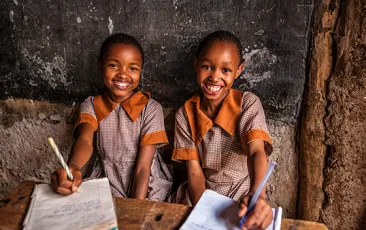
The UN Refugee Agency estimates that the number of forcibly displaced people has more than doubled in the last 10 years, totaling approximately 122 million people. The main drivers of displacement include conflict and violence, extreme weather events, and human rights violations.
Close to 50 million refugees and internally displaced populations are under the age of 18. In addition, millions of people are stateless, having been denied a nationality and access to basic rights such as education, healthcare, and employment.
Our Work
AIR recognizes the importance of this extraordinary challenge. It works with governments, UN agencies, and key stakeholders to evaluate programs and policies to better understand what works, and implement evidence-based interventions that help forcibly displaced populations cope as well as assist them in finding sustainable solutions to improve their lives.
AIR’s research includes evaluations of education and health programs in camps for refugees and internally displaced people, livelihoods initiatives, support for women and girls, and cash transfer programs.
We are committed to applying and producing the best evidence and the highest quality work. Our quality assurance process encompasses all stages of a project, from research design to evidence-based conclusions and recommendations, to implementation and scale-up. Further, we provide rigorous monitoring and evaluation, including mixed-methods approaches, as well as process, outcome, and impact evaluations.