Understanding When Cash Transfers Deliver Health and Survival Gains
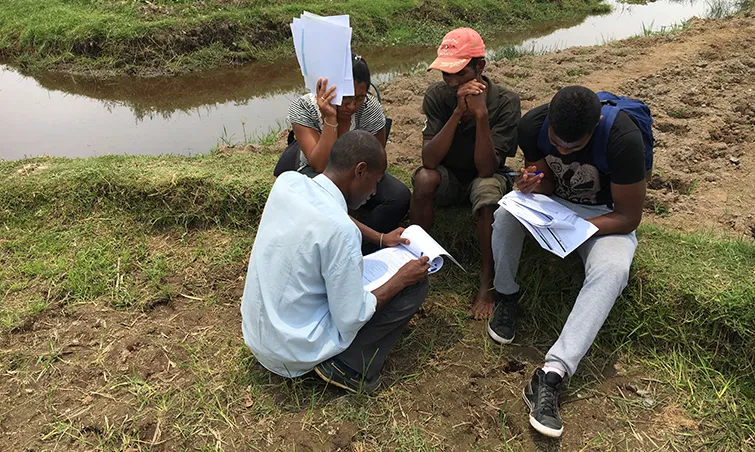
Cash transfer participants in Madagascar
Cash transfers consistently raise consumption, improve food security, and support investments in productive activities. Beyond economic gains, direct cash payments to targeted recipients can be a lifeline, helping poor households afford nutritious food and seek medical care when needed.
While improvements in food security and income are well established, important gaps remain in the evidence base regarding how and when cash transfers impact health outcomes.
Addressing Evidence Gaps on Health Impacts
AIR is examining the conditions under which cash transfers improve health by pooling data from rigorous impact evaluations of government‑supported cash transfer programs in sub‑Saharan Africa. Understanding when cash transfers yield sizeable health gains is essential for designing cost‑effective strategies to reduce poverty and save lives.
This work builds on existing cash transfer evaluation data from past projects and combines these data with information on contextual moderators, including weather‑related indicators (e.g., droughts, flooding, rainfall); macroeconomic conditions (e.g., food prices, poverty levels); and health systems and service availability.
Pooling data, and therefore evidence, across studies provides greater inferential leverage than single evaluations. By harmonizing outcomes and covariates across different programs and settings and applying a common estimation model, we are able to:
- Increase precision in estimated impacts;
- Separate true program effects from site‑specific noise; and
- Improve statistical power to identify how effects vary with contextual characteristics, such as rainfall and droughts.
Informing More Effective Program Design
Through this analysis, the project aims to clarify how context, shocks, and implementation conditions determine when cash transfers translate into improved economic well‑being, better health outcomes, and survival gains. These findings will help inform the design and targeting of cash transfer programs to maximize both economic and health impacts.