The Impact of Emerging Technologies on Employers, Workers, Job Seekers, and Students
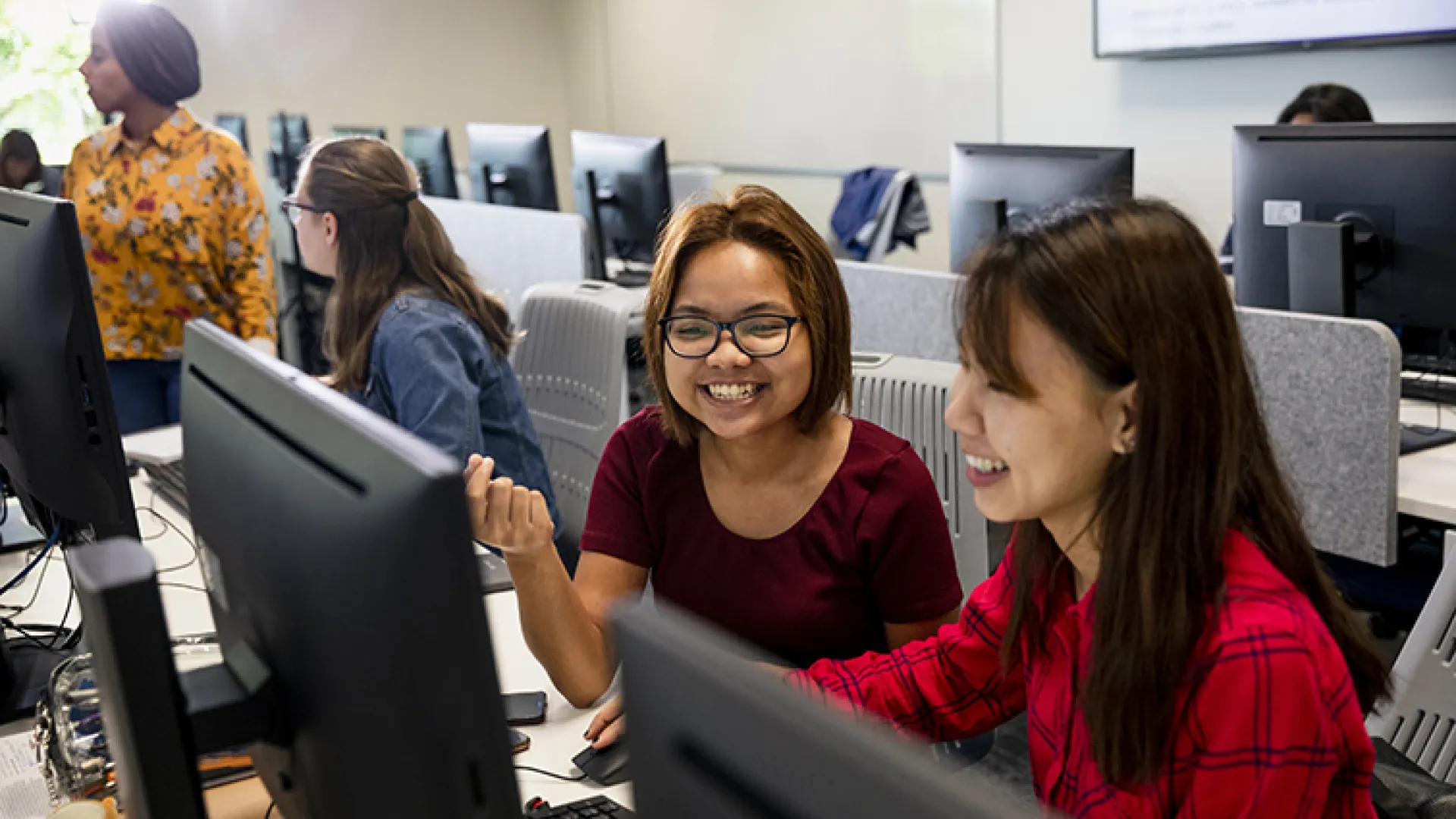
Today’s workforce is rapidly evolving as emerging technologies, such as artificial intelligence, climate science, and cybersecurity, have led to unprecedented change in our approach to job training, skills-based learning, and other types of training and education. Increased focused on these emerging technologies has required employers to be more flexible and more equitable in how they engage and retain job seekers. Preparing the workforce of the future to succeed in these careers hinges on our ability to strategically overhaul postsecondary education pathways while leveraging advanced technology to do so.
To support this future workforce, AIR is not only evaluating how emerging technologies impact the integrity of learning, but also how these technologies can be leveraged to improve learning within postsecondary education institutions and workplaces.
Through several projects and initiatives, AIR is committed to exploring the complex inter-relationships, and bridging the gaps between emerging technologies, workforce development, and postsecondary education. In doing so, AIR is generating new evidence in the following ways:
- How artificial intelligence and related technologies can revolutionize approaches to postsecondary education and workforce development;
- How the use of emerging technologies can bridge the chasm between the current skill supply and future workforce demands; and
- How emerging technologies can be used to address equity gaps and enrollment/retention issues at postsecondary institutions.
Explore our work below.
Our Work
Research Briefs: Trends in Emerging Technology and Workforce
In these 2023 research briefs, AIR explores the transformative power of technology in fostering a resilient, adaptable, and thriving workforce. In addition, AIR evaluates how post-secondary institutions should respond to emerging technologies.
- The Role of Artificial Intelligence in Workforce Development
- Reimagining Postsecondary Education to Support the Emerging Technology Workforce
Career and Technical Education Research Network
Career and technical education (CTE) prepares students with academic, technical, and employability skills for success in the workplace and in further education. More research is needed to understand its effects on student outcomes. Led by AIR and its partners, the CTE Research Network seeks to meet this need by increasing the number of impact studies and strengthening the capacity of the field to conduct and use rigorous research.
Advancing the Long-Term Potential of Fundamental STEM Education Research: The NSF ECR Hub
National leaders have urgently called for more workers with educational training in science, technology, engineering, and mathematics (STEM) fields to address the needs of an economy that increasingly relies on technology innovation. Unfortunately, the current U.S. STEM education system fails to meet the needs of even current workforce demands. This five-year resource center is a partnership with the National Science Foundation (NSF) to extend the reach of existing NSF investments and build career opportunities related to fundamental STEM education research.
Informing Improved Recognition of Military Learning
With more than 1 million veterans having used the Post-9/11 GI Bill benefits, it is critical to better understand the challenges veterans face—and paths institutions could take to address those challenges by better recognizing their learning. This project examines veterans’ experiences with, and perceptions of, having their military learning recognized by postsecondary institutions as they pursue a credential.
The 2018 NAEP Oral Reading Fluency Study
This study was conducted by the National Center for Education Statistics to better understand the relationship between oral reading skills and reading comprehension for fourth-grade students. Students' oral reading fluency—the ability to read connected text with speed, accuracy, and expression—and foundational skills for fluency (word reading and phonological decoding) was measured digitally using the automatic speech analysis and scoring system.
Innovations in Distance Education: Datacasting
While many schools and districts have relied on educational technology to help counter the effects of COVID-19, approximately 658,000 households in the U.S. lack readily available internet access; datacasting can help alleviate the stress of not having broadband access. AIR is bringing together stakeholders from state education agencies, libraries, and public broadcast stations to discuss best practices and to address potential hurdles in datacasting implementation.