Demystifying How to Participate in NSF Funding: Lessons Learned from NSF-Funded Resource Centers
Broadening the participation of researchers in STEM fields extends beyond preparing pre- kindergarten through 12 students for entering the STEM workforce. As it relates to the work of the National Science Foundation (NSF), broadening participation includes expanding the field of researchers, institutions, and regions, who have historically received less NSF funding.
NSF invests in funding resource centers to build awareness of and capacity to apply for funding through the foundation and to broaden the dissemination of research findings from NSF-funded projects. These resource centers are charged with supporting a wide range of researchers from different backgrounds and experiences, institutional types, and education levels.
Brief: Lessons Learned from NSF-funded Resource Centers
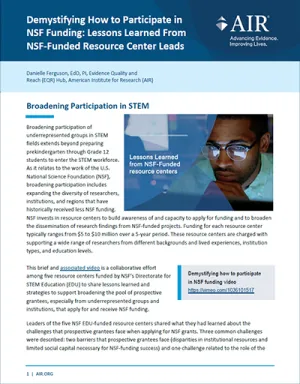
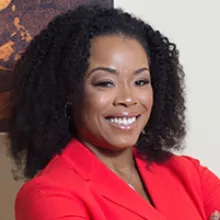
Danielle Ferguson, a principal researcher at AIR and principal investigator of the Evidence Quality and Reach (EQR) Hub, interviewed leaders from four resource centers funded by the NSF's Directorate for STEM Education (EDU) about the challenges that prospective grantees face when applying for and securing NSF grants.
This brief and the video below are a collaborative effort between the EQR Hub and several other NSF EDU-funded resource centers to share lessons learned and strategies to support broadening participation of prospective grantees who apply for and receive NSF funding.
Three common challenges were described, two of which are faced by prospective grantees (i.e., disparities in institutional resources and limited social capital necessary for NSF funding success) and one related to the role of the resource center itself (i.e. how to develop capacity building events and resources that honors the expertise of the community).
These resource center leaders also shared lessons learned that they use to mitigate these challenges, including building relationships with prospective grantees, brokering relationships between current and prospective grantees, and centering the expertise of prospective grantees in learning events and production of materials. Many of these strategies can be applied beyond the use of NSF resources.
Additionally, key takeaways from the brief and video about the challenges faced and strategies prospective grantees implement when applying for and securing NSF grants have been composed into a streamlined infographic.