Amanda Ortega
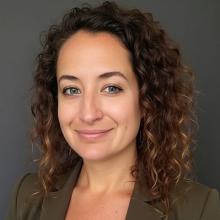
Amanda Ortega, an applied researcher, has more than a decade of experience working to bridge research and practice. She has worked extensively as a monitoring, evaluation, and learning (MEL) professional, embedded in project implementation teams facilitating evidence-based adaptive management. Her work has spanned over 18 countries across the globe and includes a host of independent performance evaluations and assessments.
Ortega specializes in participatory and qualitative methods, centering community voices and including systems perspectives across her MEL and research. Her work has focused on positive youth development, women and girls’ empowerment, human and labor rights, and education and workforce development. An expert facilitator, she uses co-creation, learning agendas, and sensemaking approaches to ensure evidence is usable and aligned to decision-making processes.
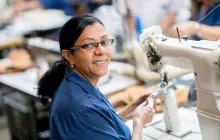
At AIR, she serves as director of two technical assistance initiatives focused on enabling women to voice and claim their labor rights, including maquila women workers in Honduras and domestic workers in Mexico, using participatory action research, co-creation, training, and technical assistance approaches. She previously oversaw the portfolio-level MEL team for a portfolio of labor rights technical assistance projects in Mexico and Honduras funded by the U.S. Departments of Labor and State, guiding her team to implement a coordinated MEL strategy, incorporate complexity-aware and mixed methods, and ensure a focus on outcomes measurement and evidence generation for learning and project adaptation.
Prior to joining AIR, Ortega worked as a MEL specialist for youth-focused economic empowerment programs across Latin America and the United States with the International Youth Foundation. She also led a number of evaluations, assessments, and MEL initiatives with Resonance focused on issue areas such as women’s economic empowerment in supply chains, gender-based violence in humanitarian emergencies, prevention and reduction of statelessness, post-conflict economic resilience, and education.









M.A. International Affairs, American University; B.A. Anthropology, Hofstra University